
Ballet fantastique in one act
Music by Nikolai Krotkov
Décor by Mikhail Bocharov
Costumes by Evgeniy Ponomarev
World Première
23rd November [O.S. 11th November] 1890
Imperial Mariinsky Theatre, Saint Petersburg
Original 1890 Cast
The Pink Nenuphar
Varvara Nikitina
Franz
Pavel Gerdt
Karl
Miss Nedremskaya
Peter
Miss Pavlova I
Hans
Miss Slantsova
Pavel
Julia Kschessinskaya
Fritz
Miss Stepanova II
Genrikh
Miss Skorsyuk
Rudolf
Miss Vsevolodskaya
Adam
Miss Stepanova IV
Forget-Me-Nots
Maria Anderson
Varvara Rikhlyakova
Matilda Kschessinskaya
Olga Preobrazhenskaya
Lilies
Anna Johansson
Marie Petipa
Miss Zhukova I
Claudia Kulichevskaya
Grandfather of the Waters
Mr Belov
History
Nénuphar (The Water Lily) is a one-act ballet fantastique by Petipa and the composer Nikolai Krotkov. However, information on this ballet is quite scarce. The libretto is a dark fantasy, very much in the style of the stories of E.T.A. Hoffmann (author of The Nutcracker) and echoes that of The Blue Dahlia, where a young man becomes obsessed with a flower, which proves to be his undoing.
Libretto
The ballet takes place in a marshy locale overgrown with reeds and water lilies on a spring evening where will-o-the-wisps and luminous insects fly about. The tutor Jodokus arrives with a group of his students, among whom is Franz. Jodokus has promised to show them a rare natural occurrence – the blossoming of the rare pink water lily. However, Franz is indescribably excited and knowing this, Jodokus warns him not to lose his composure as evil spirits are known to appear in the marshes where fumes and the aroma of the water flowers cause hallucinations and death. As they proceed, the marsh dew evaporates, the will-o-the-wisps and the luminous insects disappear, and the moonlight falls on the landscape. The pink water lily slowly begins to blossom, together with the other flowers, but they see the botanists are nearby and disperse in fright.
One of the students, Karl rushes in, his hat strung with the insects he has caught, as he and his friends are gathering moths for their scientific collections. The pick corolla of the water lily flits over to a reed; Karl catches it and gleefully shows it to his comrades. He is about to put his new prize inside his storage box when Franz begs him to let the flower go. Jodokus and the others laugh at this suggestion, but Franz claims it would be a pity to destroy a flower that only blossoms on one night by moonlight and asks them to put the corolla back to end its existence in the flower’s cup. But the others mock Franz and Karl, paying no heed, prepares to put the flower in his box. However, Franz frees the flowers, which angers the others and as the corolla disappears, the tutor and his students, except Franz, run off in pursuit of the water lily, unaware that the corolla has stayed behind and timidly thanks Franz for saving her. Recalling the pink water lily’s miraculous occurrence and magic, Franz becomes drunk with the flower’s aroma and feels an incomprehensible love for the corolla. He begins to kiss her, yielding to this exaltation.
Water lilies, forget-me-nots, lilies of the valley, other lilies, irises and reeds approach from all sides, surrounding the corolla, enchanting Jodokus and the students who have come back for Franz. Jodokus initially takes pleasure in the flower’s fantastic games and dances, but growing drunk from their aroma, he suddenly realises it is supernatural activity and drives them off. Horrified and foreseeing the end of himself and his students, Jodokus begs them to flee, but they are powerless against the pernicious scent, having stayed too long in the marshes. Exhausted, they collapse.
Disregarding the fate of his comrades, Franz embraces the corolla, continuing exalted to whisper to his beloved flower. The grateful corolla explains that she is only the heart of the water lily, which Franz esteems too highly, and warns him that if he gets too close to her, he will die. To be the flower’s beloved, he must become a will-o-the-wisp and pursue her into the depths of the marshy waters. Franz, dizzy with love and ecstasy from the fatal scent, disregards her counsel and continues to revel in the corolla’s beauty.
Dawn breaks and the sun rises; the supernatural forces must disappear. The corolla reminds Franz of the dangers and asks him to leave again, but the helpless young man cannot overcome his exalted love. Heeding neither objection nor advice, he embraces the corolla, which, while trying to break free, moves to the depths of the marsh. Drawn by the flower, Franz follows and disappears with it into the deep waters.
An apotheosis shows a group of flowers, water lilies and other water plants and on an eminence, the grandfather of the waters.
The Production
The ballet was originally intended to be in two acts, but the first act was rejected, as we learn from the first announcement of Nénuphar in the newspaper Novoe vremya on the 23nd September [O.S. 11th September] 1890:
“The Nénuphar, which Petipa composed for a gala performance proposed for the summer was announced for the Mariinsky at the beginning of November. Composer Nikolai Krotkov was paid 3000 Rubles for this two-act ballet, of which only the second will be given; the first act was rejected by the direction.”1
The rejected first act was a village celebration with a divertissement of dances from regions of Germany, a wedding and the entrance of several hunters with a deer, a sharp contrast to the final edition of a young man being enchanted by water lilies. Petipa’s notes on Nénuphar offer little information; the only documents that offer any insight into his work on the ballet is a rejected manuscript scenario, in which the enchanted Franz is urged to flee by a gilded dragonfly. As he sinks into the waters, Jodokus and the other students enter, searching for him. There were also sketches for an apotheosis that shows groupings of dragonflies on the pond, illuminated by electric light.
Rehearsals for Nénuphar began on the 13th October [1st October] 1890. Cast in the role of the Pink Water Lily, or rather the Corolla, was Varvara Nikitina and cast in the role of Franz was Pavel Gerdt.
World première
Nénuphar had its world première on the 23rd November [O.S. 11th November] 1890 at the Imperial Mariinsky Theatre as part of a triple bill with Lev Ivanov’s Cupid’s Pranks and Act 2 of Fiametta. The ballet was not well-received, with one critic labelling it as a “choreographic trifle”, a category into which he had also placed The Haarlem Tulip and The Sleeping Beauty, calling them “endlessly trite, boring, and lacked the slightest poetical imagination.” The two new ballets – Nénuphar and Cupid’s Pranks – produced “the most gloomy boredom” and were deemed very unsatisfactory.
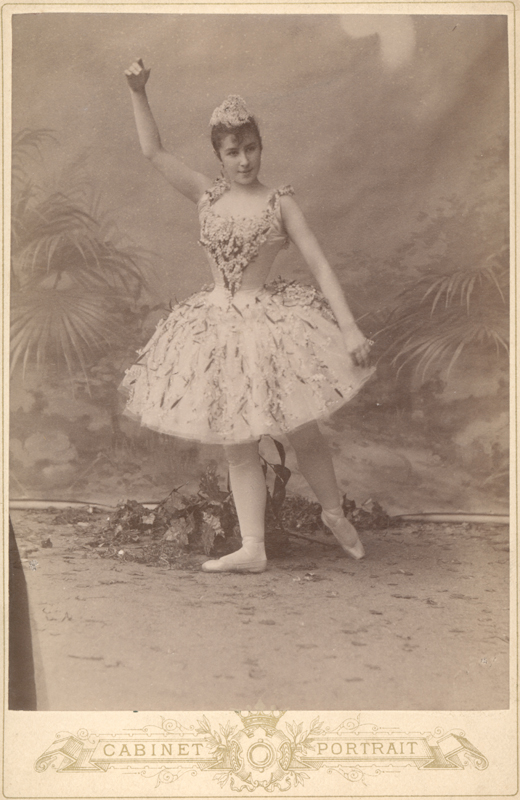
For all the negativity Nenuphar received, there was some positive reaction to certain elements. Nikitina’s performance as the Pink Water Lily was praised, with the critic of the Petersburg gazeta stating that she “personified before the public the poetical image of the likeable flower, perfectly close to real life. It needs hardly be said that with her, all the difficult dances and mimed scenes became free and smooth, and that her agile, obedient legs interlaced and glided with marvellously accessible perfection. The calls on this ballerina’s account were endless.”2
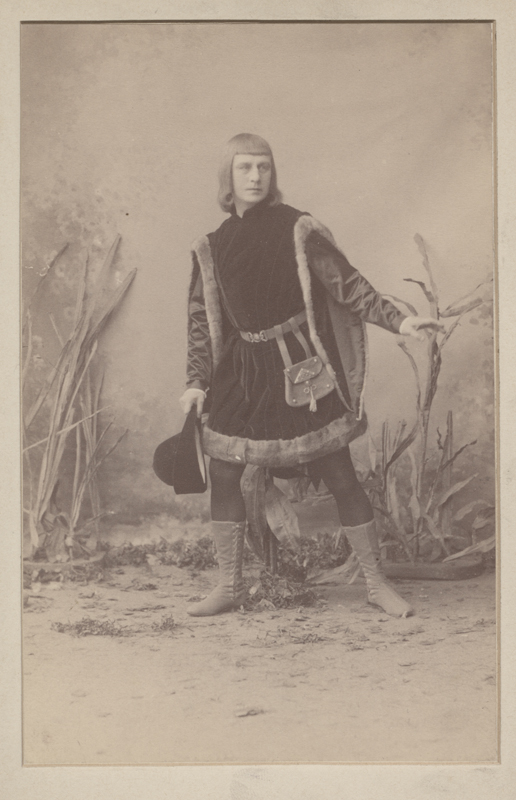
The performances of the soloists as the flowers were also praised, but the casting of women as the male students was criticised as a concession of fashion. It seems that by 1890, the practice of women dancing male roles in travesty was deemed old-fashioned, at least in Saint Petersburg as it was still in practice elsewhere. Krotkov’s music score was also praised, as was Mikhail Bocharov’s décor of the swampy locale and Evgeniy Ponomarev’s costumes of the animated flowers and night moths, which were deemed “magnificent”. Bocharov’s décor would later be reused for the second scene of Swan Lake. Petipa’s choreography was praised, especially his groupings for the corps de ballet of the flowers and moths, with one critic writing they “enliven the action with their manoeuvres and impart to the whole ballet an extremely poetical and distinctive coloration.”3
Nénuphar was given five more performances until 15th March [O.S. 3rd March] 1891, after which it was dropped from the repertoire. A revival was planned in 1898 but never materialised. In 1916, Nénuphar reappeared on the Imperial Mariinsky stage in a new revival by Samuil Andrianov, with Tamara Karsavina as the Pink Water Lily.
 The Marius Petipa Society