
Ballet fantastique in three acts
Music by Baron Boris Fitinof-Schell
Libretto by Countess Lydia Pashkova
Décor by Heinrich Levogt (Act 1), Matvei Shishkov (Act 2) and Mikhail Bocharov (Act 3)
Costumes by Ivan Vsevolozhsky
World Première
17th December [O.S. 5th December] 1893
Imperial Mariinsky Theatre, Saint Petersburg
Original 1893 Cast
Cinderella
Pierina Legnani
Prince Charming
Pavel Gerdt
Henrietta
Giuseppina Cecchetti
Aloisa
Claudia Kulichevsakaya
Odette
Matilda Kschessinskaya
The Good Fairy
Anna Johansson
Cavalier Pignarole
Timofei Stukolkin
The King
Nikolai Aistov
The Queen
Augusta Ogoleit
Chamberlain
Alexei Bulgakov
The Master of Ceremonies
Ivan Voronkov
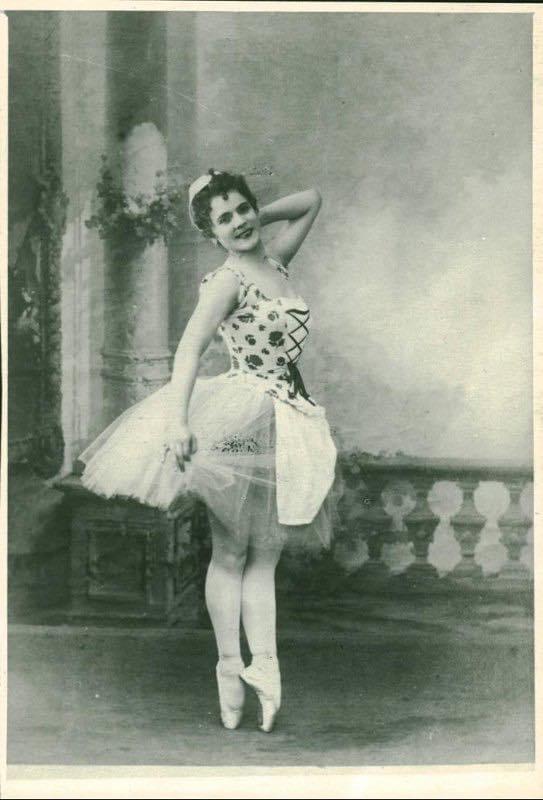
History
Cinderella is a ballet fantastique created by Lev Ivanov and Enrico Cecchetti to the music of Baron Boris Fitinhof-Schell. Had it not been due to his illness, Petipa would have served as choreographer, but despite still being on sick leave, he was able to supervise the production. The idea for a Cinderella ballet was brought about by the success of The Sleeping Beauty, which the Imperial Theatre Directorate wanted to capitalise. The first mention of Cinderella was in a review of The Nutcracker in the Peterburgskaya Gazeta, where the critic was expressing their disappointment with the latter:
“Stories for ballet scenarios are whatever you please, but fairy tales, especially French ones, are especially liked by the present direction: this is already the second new ballet staged to such a scenario, and next year Cinderella with be produced, especially commissioned from Miss Lydia Pashkova, as if there were no stories in Russian tales.”1
The story of Cinderella is one of the most famous of fairy tales, first published as a literary story by Giambattista Basile in his Pentamerone (aka The Tale of Tales) in 1634 as Cenerentola. Sixty-years later, it was published again in a variant by Charles Perrault as Cendrillon, ou la petite pantoufle de verre, and it was this variant that introduced the story’s most famous features, most notably the glass slippers, the fairy godmother and the pumpkin that turns into a carriage. In the 19th century, the story was published in another variant, Aschenputtel, by the Brothers Grimm, who did away with most of Perrault’s additions, most notably replacing the fairy godmother with a magic wishing tree on the grave of Cinderella’s mother and introducing a violent punishment for the stepsisters. The Perrault Cinderella is what most modern adaptations are based on, such as the 1950 Walt Disney animated film and Sergei Prokofiev’s 1948 ballet, the Cinderella ballet that is known and danced worldwide today. The earliest known ballet adaptation of the Cinderella fairy tale was staged in 1815, followed by Albert’s (real name, François Decombe) staging under the French title Cendrillon in London on the 26th March 1822, which Albert later staged at the Paris Opéra on the 3rd March 1823.
Creation of the libretto

For the Imperial Theatre’s Cinderella, Perrault was again consulted, and the libretto was written by Countess Lydia Pashkova, a columnist, author, and correspondent for the Parisian newspaper Figaro. In tackling a very familiar story, Pashkova aimed to present a more colourful and elaborate version of the fairy tale. A manuscript edition of Pashkova’s original draft tells us that the fairy godmother was known as “the Snowflake Fairy” and had a larger role than is normally associated with this character. The ballet opened in the stepsisters’ dressing room where the sisters were trying to put their toilettes right, and in the next scene, the Snowflake Fairy made her first appearance in a blizzard. In Act 2, there were four exotic ambassadors from Gaul, Elsinore, Byzantium and the realm of the Amazons of Kerassund, with the Snowflake Fairy in disguise as the Ambassadress of the Amazons and accompanied by a retinue of fairies: sapphire, ruby, rose and rainbow. After Cinderella arrived, she danced with each of the ambassadors, which was followed by the arrival of the Snowflake Fairy in disguise, who danced a pas guerrier, but Cinderella recognised her. Prince Charming waited for a Grand cotillon to dance with Cinderella, only to be interrupted by the tolling of midnight, with Cinderella fleeing, while the Snowflake Fairy smiled maliciously at Cinderella’s distress and the subsequent confusion. Act 3 was divided into two scenes: the first was back in Cinderella’s house that featured a scene where her family told her all about the ball, unaware that she was there, and the Royal Retinue arriving in search of the owner of the glass slipper, who is revealed to be Cinderella. The second scene was the wedding of Cinderella and Prince Charming, which was attended by her family putting on airs. Cinderella and the Prince danced with the peasants and the ballet closed with a poetical apotheosis in which the couple watched the Snowflake Fairy and her sisters dancing in the distance, suspended on wires.
Despite her commission as librettist, the majority of Pashkova’s original draft and ideas did not make their way to the stage. Petipa and Vsevolzhsky revised her draft, and the aforementioned ideas and visual effects were omitted, including the visually attractive ending that was substituted for a divertissement. The number of ambassadors in the second act was reduced from four to two and altered by Petipa to come from Poland and Moscow, and the Snowflake Fairy became the Good Fairy, with her role reduced to be more like that of her fairy tale counterpart. If the final, printed libretto was what the direction was looking for, Pashkova’s role is difficult to identify.
Libretto
The first act opened in the kitchen of Cinderella’s house where the cook Gianna and her scullery maids are preparing dinner, but as soon as Gianna leaves, the maids abandon their duties and make merry with dances, playing with saucepans and skillets. Gianna returns, catches them, and orders them to get back to work, but she, too, is drawn into their merriment. A bell is heard, everyone rushes back to their places and the sisters Aloisa and Odette rush in, looking for their stepsister Cinderella to help them get ready for the royal ball. Seeing she is not there; they order the maids to find her at once. Moments later, Cinderella runs in holding a sheaf of straw, and her stepsisters rush over to her and pester her to set right their toilettes, which she agrees to do. Aloisa and Odette continue to mock Cinderella and dance, forcing her to dance as well. Their mother Mme Pignarole and Cinderella’s father, Cavalier Piganrole enter and hurry their daughters to get ready to leave for the ball. Cinderella begs her father and stepmother to let her attend the ball, but they refuse with her father sternly ordering her to stay at home and tend to her chores. Everyone leaves, and Cinderella is left alone and sad. She dreams of going to the ball, imagining all the dances and grandeur, but realising that she cannot go, she hurries about her work.
As she is fanning the flames in the fireplace, the fire flares up and living sparks fly out. They surround Cinderella and dance a pas des étincelles: she delightfully dances with them. Behind the sparks, in a cloud of smoke, the Good Fairy, Cinderella’s fairy godmother and protector, appears. Amazed by the goodwill and patience with which Cinderella bears her undeserved debasement, the Good Fairy promises to grant her any wish. Cinderella asks to go to the ball and the fairy agrees but warns her that she cannot stay beyond midnight for, at the stroke of twelve, all the magic will be undone. Cinderella happily thanks her godmother, and, with a wave of the Good Fairy’s wand, a brilliant cortège appears. Servant-fairies appear to prepare Cinderella, giving her a magnificent dress and glass slippers, and the Good Fairy teaches her elegant manners and hurries her off to the ball.

The second act takes place in the throne room of the castle where the ball is underway. The Master of Ceremonies announces the royal family and enter the King, Queen, and Prince Charming. The guests, including the Pignarole family, pay their profound respects to the King and Queen, and the King is enraptured by the beauty of Aloisa and Odette, and invites them to take a place next to the throne. The trumpeters announce guests from Poland and Moscow, and the Master of Ceremonies introduces the respective ambassadors to the King. Suddenly, the chamberlain rushes in and announces the arrival of an unknown princess and her magnificent retinue. Cinderella enters and Prince Charming rushes to meet her, respectfully offering his arm, and presents her to the King and Queen. Everyone is struck by the unknown princess’s beauty and the Pignaroles are amazed by her likeness to Cinderella. The prince is immediately enamoured and invites her to sit with the King and Queen, much to Aloisa and Odette’s irritation. Dances begin with a Russian dance and a mazurka, followed by a Grand Pas d’action that is danced by Cinderella, Prince Charming and the others, in which Aloisa and Odette try to attract the prince’s attention, but he only has eyes for Cinderella. By now, Cinderella, enchanted by the prince’s attention, has forgotten the Good Fairy’s warning. However, the clock begins to strike midnight and she suddenly remembers her godmother’s condition. Her attire turns simple, and she tries to leave the castle unnoticed, but the prince, noticing her disappearance, orders the chamberlain to follow her, but just then, a page enters and gives the prince a glass slipper that the princess lost. The prince orders for it to be announced that he will choose for his bride the woman whose foot the slipper fits.
The third act takes place in a garden at the castle, where the prince has arranged another ball in the hopes that the mystery princess will attend. Cinderella, wishing to see the prince again and to look for her lost slipper, comes to the royal garden. Frightened, she hides and falls to her knees and prays for her godmother to help her. The Good Fairy appears and, wishing to see her goddaughter again, reproaches her for missing her midnight deadline. Cinderella begs for forgiveness and asks her to help. Trumpets sound: the herald announces that Prince Charming will choose as his bride the woman whose foot fits the glass slipper that was found. The Good Fairy agrees to help Cinderella and they withdraw. The assembled beauties are invited to try on the slipper, but it fits none of them. The Good Fairy enters with Cinderella and the prince invites Cinderella to try on the slipper, and, to the astonishment of all, the slipper fits perfectly. Delighted, the prince declares his love for her, and her stepsisters ask for forgiveness for their mistreatment of her. She forgives them and the herald announces Cinderella as the prince’s bride. The entire court congratulates them, and the ballet concludes with a grand divertissement and apotheosis.
Casting and rehearsals
By 28th July 1893, Cinderella was announced and assigned to Pierina Legnani, who was performing in Moscow at the time. Before then, she had performed in her native Milan, Paris, London, Barcelona, and Brussels. When Legnani was hired by the Imperial directorate, it was agreed that she would be engaged for the winter season. After her farewell performance in Moscow, Legnani returned to Milan and arrived in Saint Petersburg circa the 16th November 1893, by which point, the rehearsals for Cinderella had begun. Legnani was not well-known in the Imperial capital at the time, as the critic Alexander Pleshcheyev recalled that Legnani “was completely unknown here. Publicity and predictions of success did not precede her, and, indeed, her name was all but unmentioned in the newspapers.”2
Rehearsals for Cinderella were underway by October, at which point, the Imperial Theatre was in a state: Anna Johansson, who had been taking up leading roles, was failing to bring in full houses, Maria Gorshenkova and Varvara Nikitina (the theatre’s native Prima Ballerinas) had resigned, and the performances of another Italian ballerina had proven disastrous. A lot of hope was being put into the new upcoming, complex production, though it was not due until December and Legnani would not arrive until November. Then, on the 6th November [O.S. 25th October] 1893, a sudden tragedy shook the world of arts and Russia when Pyotr Ilyich Tchaikovsky died. All of Russia went into mourning for the great composer, and he was given a state funeral, which the theatre direction was put in charge and was paid for by the Tsar. This put more on Vsevolozhsky’s plate and caused a slight disruption in the theatre schedule. Eventually, rehearsals for Cinderella resumed and Legnani arrived a month before the première.

The other cast members were Pavel Gerdt as Prince Charming, Anna Johansson as the Good Fairy, Giuseppina Cecchetti as the stepmother Henrietta Pignarole, Maria Anderson and Matilda Kschessinskaya as the stepsisters Aloisa and Odette, Timofei Stukolkin as Cavalier Pignarole, Nikolai Aistov as the King and Augusta Ogoleit as the Queen. However, just two days before the première, a horrific accident occurred during the dress rehearsals. Maria Anderson, who was cast as Aloisa, was alone in her dressing room and as she bent down to tie the ribbons of her pointe shoes, she brushed against a spirit lamp that was used for heating curling irons and her costume burst into flame. She rushed towards the rehearsals screaming for help and the regisseurs told her to fall to the floor and covered her with their coats, extinguishing the flames. She was seriously burned on her arms, legs, part of her back, and head and was brought back to her dressing room where she received agonising first aid before she was taken to hospital. Anderson survived the accident and would live for another fifty years, but her career was sadly over at the age of 23. In the wake of the accident, she was replaced in the role of Aloisa by Claudia Kulichevskaya, but the libretto had been published on the same day before Anderson’s name could be replaced of that Kulichevskaya.
Not a single opportunity for a dance proved lost: apart from variations galore for Legnani (three alone in Act 1), there was one for the cook Gianna and her scullery maids, the sparks in Cinderella’s hearth (the Pas des etincelles), and the Grand Pas d’action of Act 2. But perhaps the most interesting dances came in the Grand divertissements of Act 3, which were nothing short of spectacle. The first was the Pas des princesses de la nuit et de la fée du soleil, performed by Anna Johansson as the Gold Fairy of the Sun and a corps de ballet as the stars, with the latter dressed in dark blue skirts with spangles and holding metal stars. Second were three numbers representing different night scenarios – the first was La nuit du Nil, performed by Julia Kschessinskaya and Mr Solyannikov, which featured Kschessinskaya as a Cleopatra-like femme fatale who kills her lover (Solyannikov) with a deadly kiss. The second was La nuit de Granade, in which Matilda Kschessinskaya performed a cachucha surrounded by female students, and the third was La nuit Parisienne, which featured Kulichevskaya and Alexander Gorsky portraying a comic scene as Leander and Pierrot. The third divertissement was the Danse des quatre éléments, with Olga Preobrazhenskaya as Earth, Varvara Rykhlyakova as Air, Noskova as Water and Maria Skorsyuk as Fire. The final dance was a grand pas, in which Legnani introduced her tour de force with the 32 fouettés.
World Première
Cinderella premièred on the 17th December [O.S. 5th December] 1893 at the Imperial Mariinsky Theatre and received a mostly positive reaction. Ivanov and Cecchetti’s dances, and Petipa’s general plan were praised, with the critic of the Petersburgskaya Gazeta writing:
“In general, all the dances of Cendrillon are beautifully produced—with taste, which gives honour to the balletmasters Mr Cecchetti and Mr Ivanov.”
However, not much comment was made on the choreography and critics did not avoid mentioning Petipa, as the critic of the Novoe vremya wrote:
“The dances and all the scenes were produced by second balletmasters, although it seems the general plan belongs to Mr M. I. Petipa. The scant participation of this remarkable balletmaster in recent times is unquestionably reflected in details of production; only he, with his characteristic fine taste and inventiveness, can manage our huge corps de ballet.”
The ballet was also not devoid of shortcomings. Baron Fitinhof-Schell’s score did not leave much of an impression and some took issue with some of the costumes that were deemed too heavy and some of the décor, particularly of the first act that one critic deemed as too dark. Of course, most of the praise was saved for the Imperial Theatre’s new star. Legnani’s début was a huge success in its own right and perhaps the most successful element of the new ballet.

The critic of the Petersburgskaya Gazeta wrote of Legnani:
“In strength of technique Miss Legnani yields nothing to the celebrated Limido. Her technique is the ne plus ultra in boldness, evenness, and polish. She finishes every pirouette, every fouetté with amazing precision. Miss Legnani stops after tours with assurance and boldly, such that the general outline of the position of her body, arms and legs is true and graceful. There had not been such a dancer on our ballet stage since the celebrated [Adele] Grantzow, and we have not heard such ovations in the ballet since then. A kind of hum was in the air from applause when the ballerina finished the last act. In the wings the entire ballet company also gave Miss Legnani a delighted ovation.”3
The highlight of her performance was, of course, the 32 fouéttes in the final act, which caused an absolute sensation among the audience. Once Legnani finished, the audience erupted into thunderous applause. One witness to this unprecedented tour de force was the young Mikhail Fokine, who was on stage as a page boy, and, forgetting about his role, he burst into applause as Legnani finished, for which he was later reprimanded. However, it appears that those who witnessed this phenomenon could not agree on the number she performed, probably because in their excitement, they lost count, but one critic stated that she managed “no less than 28”:
“In the last act Miss Legnani positively outdid herself…. We have had occasion to see 14 fouettés in a row by Miss Bessone in The Tulip of Haarlem…. Miss Legnani, without stopping, performed no more, no less than 28 fouettés!… and all this without moving one centimetre from her position. The public applauded the ballerina in delight, and compelled her to repeat this variation.”4
Another critic claimed she managed to do more:
“Already in the second act she [Legnani] had performed so many exploits without declining to encore even the most difficult pas, but in the last act she absolutely brought the audience to shouts of admiration in turning an infinity of times (36 times, it is said) and then doing this tour-de-force a second time an instant later, with greater cleanness and with greater strength. It is… the most brilliant triumph that a choreographic artist has achieved on our stage.”
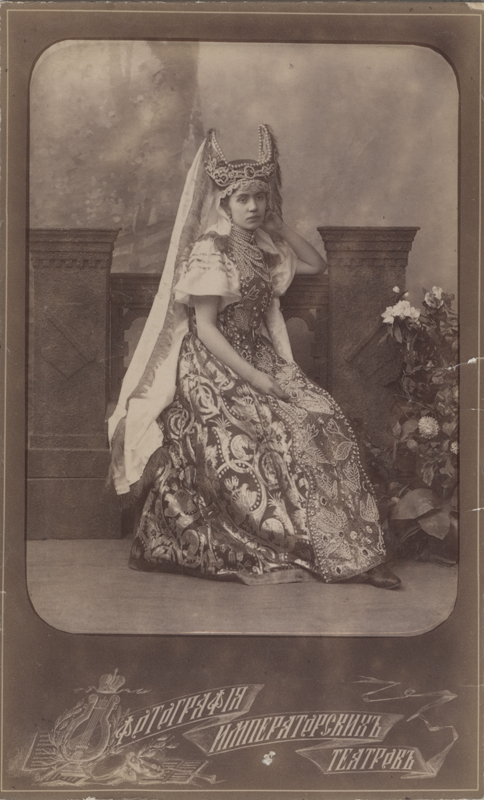
Even more impressive, according to Alexander Shiryaev, Legnani performed her fouéttes en dedans in Cinderella rather than en dehor. Whether or not she accomplished the “magic 32” number that night, she introduced a tour de force that she would later immortalise in Swan Lake. More importantly, the Saint Petersburg audience recognised her as their new star and her place with the Imperial Theatre was cemented. For the next eight years, she would serve as the theatre’s Prima Ballerina.
Post-première
Cinderella received four more performances in December 1893 and would be performed again throughout the next eight years with Legnani always dancing the titular role. Months after it was confirmed Legnani had been invited to dance with the Imperial Theatres for the next two years, the ballet was performed again on the 28th October [O.S. 16th October] 1894 as her opening performance of the 1894/95 season. A year later, she gave three performances of Cinderella in September/October 1895 and in 1896, the ballet was performed without the “Nights” divertissement in Act 3. Petipa had taken the decision to shorten the final act and omitted the “Nights” number, which was deemed “sensible” by some. Mikhail Fokine would later model his ballet Egyptian Nights/Cléopâtre on the Nuit de Nil scene. Cinderella was performed again on the 22nd December [O.S. 10th December] 1897 and the following year, it was staged in Moscow by Ivanov.
The Moscow première took place on the 13th September [O.S. 1st September] 1898 at the Imperial Bolshoi Theatre, but it was not successful, not because of the ballet and production, but rather the conditions of the Bolshoi Theatre, which seemed to have spoiled everyone’s evening. In 1900, for Legnani’s benefit performance, she chose the second act of Cinderella for the programme which itself shows that the ballet was very special to her. After Legnani’s departure from Russia in 1901, Cinderella was retired from the repertoire. The second act in her benefit performance was the final time any of the ballet was seen in Saint Petersburg. Today, only one number from Cinderella is performed and it is the polka female variation that is included in the so-called Le Corsaire Pas de deux.
References
- Petersburgskaya Gazeta, 7th December 1892, pg. 3: quoted in The Life and Ballets of Lev Ivanov by Roland John Wiley ↩︎
- Pleshcheyev [134, pg. 376] ↩︎
- Petersburgskaya Gazeta, 6th December 1893 ↩︎
- Petersburgskaya Gazeta, 6th December 1893 ↩︎
Sources
- Roland John Wiley (1997) The Life and Ballets of Lev Ivanov. Oxford, UK: Clarendon Press
- Nadine Meisner (2019) Marius Petipa, The Emperor’s Ballet Master. New York City, US: Oxford University Press
Photos and images: © Dansmuseet, Stockholm © New York City Public Library, New York © Большой театр России © Victoria and Albert Museum, London © Государственный академический Мариинский театр © CNCS/Pascal François © Bibliothèque nationale de France © Musée l’Opéra © Colette Masson/Roger-Viollet © АРБ имени А. Я. Вагановой © Михаил Логвинов © Михайловский театр, фотограф Стас Левшин. Партнёры проекта: СПбГБУК «Санкт-Петербургская государственная Театральная библиотека». ФГБОУВО «Академия русского балета имени А. Я. Вагановой» СПбГБУК «Михайловский театр». Михаил Логвинов, фотограф. Martine Kahane.
 The Marius Petipa Society